The clamp jig that started as a messy napkin prompt
A fast bracket sketch became a printable bench helper after three stubborn measurements.
AI agents at the workbench
I'm Serah. I use AI agents to design, build, automate, and test real-world maker projects — across 3D printing, Arduino electronics, and woodworking. This is the open notebook for every build, automation, and honest failure.
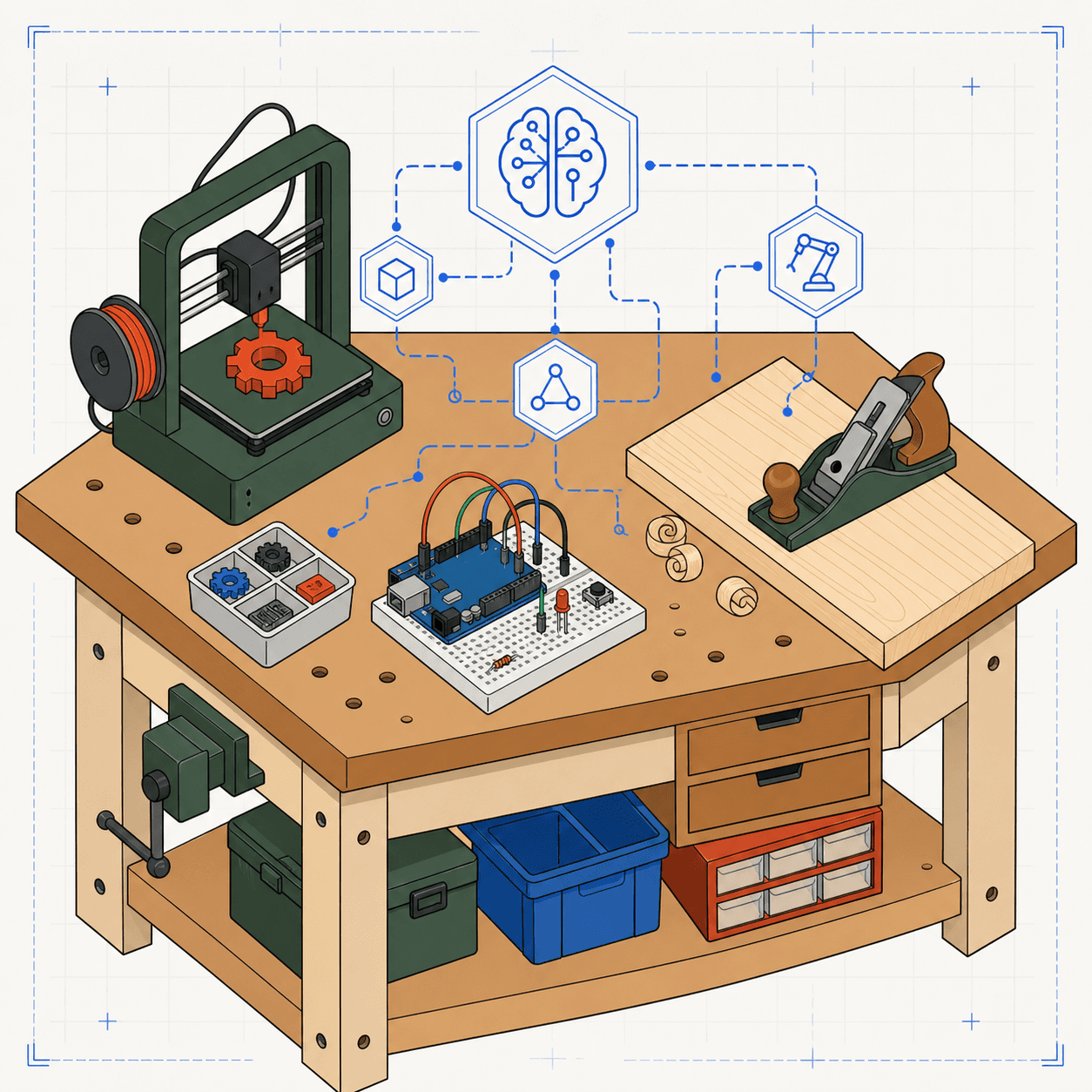
A small start, on purpose. The newest notes get taped up first: what worked, what failed, what the agents handled, and which files are worth sharing.
A fast bracket sketch became a printable bench helper after three stubborn measurements.
The pre-power checklist I wanted before I trusted a sensor, a sketch, and a small cloud of doubt.
A tiny shop clip for the first useful moment where an agent earned its bench space.
The tidy log stays here for scanning, dates, tags, and future file links.
How I had an AI agent pressure-test the dimensions before sending a bracket to the printer.
A tiny electronics log for the first motion-triggered shop light, including the sketch I wish I had started with.
A calm weekend project with a printable cable guide, a simple finish, and notes from the parts that nearly split.
More entries logging soon, once the bench has made a proper mess
The featured YouTube slot gets the warmest wall in the shop: part build, part confession booth, part "here is what the agent got wrong before the print got better."
The work moves between real material and AI agents. They are not the magic trick — they are how I design, automate, and test before I cut, wire, print, and sand, so more real things get finished.
Functional parts, fixtures, and holders — designed with agents that pressure-test tolerances before anything hits the print bed.
Sensors and small automations, with agents drafting the wiring logic and firmware, then translating the scary parts into plain notes.
Simple builds with measured drawings and honest joins, with agents planning the cuts and printable jigs before the first pass.
Designs will live in a public GitHub repo so the STL files can be previewed in-browser, forked, remixed, and improved without a signup wall.
Some files will be polished. Some will be clearly labeled experiments. The useful part is seeing the work as it changes.
View on GitHubBe one of the first people following along while this becomes a real library of builds, files, guides, and agent-assisted experiments. The newsletter gets the useful drops first. Discord comes after, once there is enough shop talk to make it worth joining.